


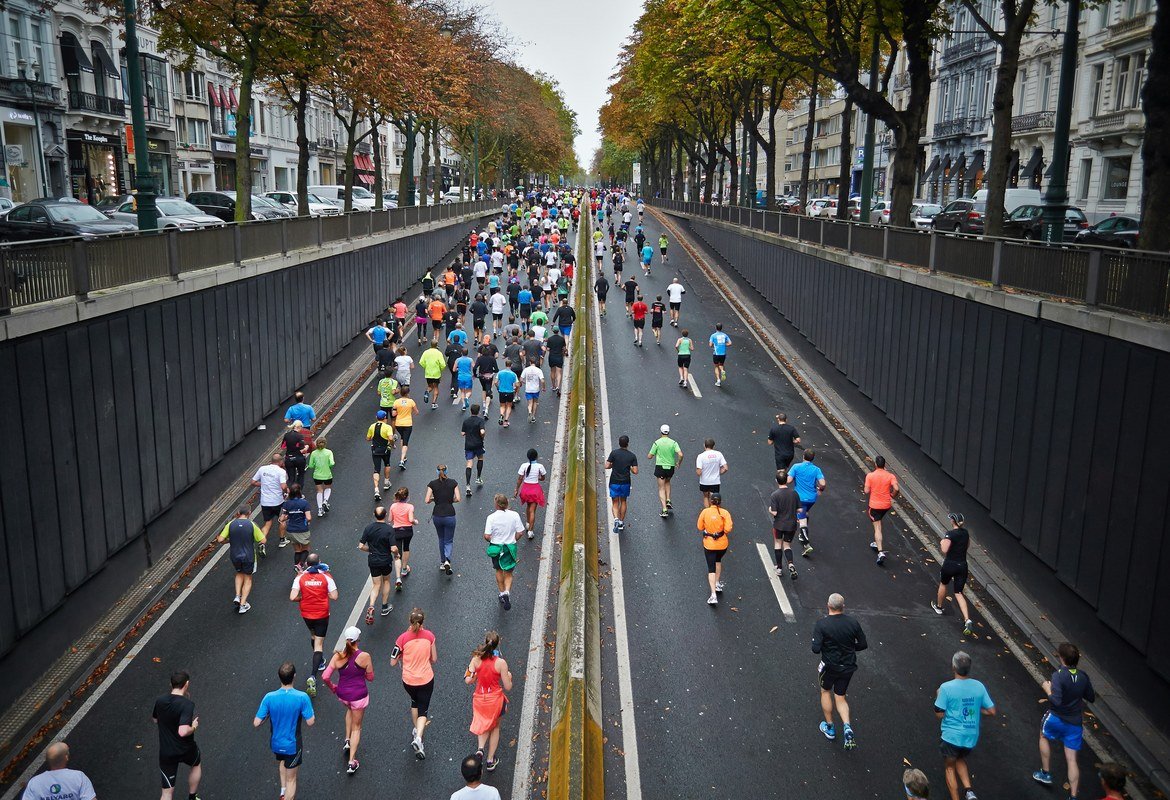
On October 12, 2019, on a tree-lined multi-lap course in Vienna, Kenyan distance runner Eliud Kipchoge accomplished what sports scientists and physiologists had long deemed biologically impossible: he completed the classical 42.195-kilometer (26.2-mile) marathon distance in 1 hour, 59 minutes, and 40 seconds. To break the mythical two-hour barrier, Kipchoge sustained an unfathomable pace of 2 minutes and 50 seconds per kilometer (4 minutes and 34 seconds per mile) for twenty-six consecutive miles—a sprint velocity that an ordinary recreation runner cannot maintain for a single 400-meter lap around an athletic track.
Kipchoge’s historic feat was not an accidental miracle; it was the pinnacle of human physiological optimization, aerodynamic pacing engineering, thermodynamic cooling science, and the commercial advent of carbon-fiber-plated super shoes. In this comprehensive masterclass, we explore the physiological limits of human endurance running, analyze the tripartite metrics of aerobic capacity, decode the biomechanics of modern super shoes, deconstruct glycogen depletion kinetics, and build a high-performance marathon training blueprint.
1. The Tripartite Physiological Engine: VO2 Max, vVO2, and Running Economy
In exercise physiology, marathon performance is dictated by three interconnected biological parameters:
| Physiological Parameter | Clinical Definition & Measurement | Elite Marathon Standard | Performance Impact on Marathon Velocity |
|---|---|---|---|
| VO2 Max (Maximal Oxygen Uptake) | The maximum volume of oxygen the cardiovascular system can transport to working muscles per minute ($mL/kg/min$) | 75 to 85 $mL/kg/min$ | Sets the absolute ceiling of the aerobic engine capacity |
| Fractional Utilization (Lactate Threshold) | The percentage of VO2 Max an athlete can sustain for two hours without accumulating blood lactate | 85% to 90% of VO2 Max | Determines the sustainable cruising speed without metabolic acidosis |
| Running Economy (RE) | The steady-state oxygen cost ($mL$ of $O_2$) required to run one kilometer at a given velocity | Under 170 to 180 $mL/kg/km$ | The fuel efficiency metric: lower oxygen consumption per kilometer equals faster sustainable pace |
The Dominance of Running Economy
While an enormous VO2 max sets the size of the cardiovascular engine, Running Economy (RE) is the true differentiator among elite marathoners. Two athletes may possess identical VO2 max values of 80 mL/kg/min, but if Athlete A possesses superior biomechanical running economy—consuming 15% less oxygen per kilometer due to efficient elastic tendon recoil and minimal vertical oscillation—Athlete A will finish the marathon minutes ahead while running at a lower relative biological strain.
2. The Carbon-Plated Super Shoe Revolution: Biomechanical Springs
No technological innovation has rewritten distance running record books as profoundly as the modern “super shoe” era. Beginning with the introduction of Nike’s Vaporfly and subsequent iterations across major athletic brands, marathon world records have tumbled by minutes.
The Anatomy of Energy Return
A modern marathon super shoe does not function like a traditional minimalist racing flat; it is a high-stack biomechanical energy-saving device combining two revolutionary components:
- Polyether Block Amide (PEBA / Pebax) Foam: Traditional running shoe foams (such as ethylene-vinyl acetate / EVA) are dense, heavy, and return only 60% to 65% of the mechanical energy absorbed during footstrike. Modern autoclaved PEBA foams are ultra-lightweight and return an extraordinary 85% to 88% of mechanical energy, acting as a resilient biological spring beneath the foot.
- Curved Carbon-Fiber Plate: Embedded within the thick foam midsole is a rigid, spoon-shaped carbon-fiber plate. The plate serves two critical mechanical roles: it stabilizes the ultra-soft, unstable PEBA foam, and it acts as a rigid lever, preventing the metatarsophalangeal (toe) joints from flexing excessively. By eliminating energy loss at the toe joints, the plate reduces the metabolic workload demanded of the Achilles tendon and calf muscles, improving running economy by a verified 4% to 5%.
3. Glycogen Kinetics: Defeating the 20-Mile “Wall”
The human body stores approximately 400 to 500 grams of glycogen inside skeletal muscle tissue and the liver—representing roughly 1,600 to 2,000 calories of readily accessible carbohydrate energy. At marathon race pace, an elite runner burns approximately 1,000 to 1,200 calories per hour, with carbohydrates providing 80% of that fuel.
The Biology of “The Wall”
If a runner relies exclusively on internal glycogen reserves, those stores are completely exhausted around mile 20 (kilometer 32). When glycogen reaches zero, the body is forced to transition abruptly to 100% fat oxidation. Because fat requires significantly more oxygen to metabolize than carbohydrates, the runner’s velocity collapses instantly: legs turn to concrete, stride frequency deteriorates, and cognitive brain fog triggers despair—the classic phenomenon known as “hitting the wall”.
Modern High-Carbohydrate Fueling Protocols
Elite modern marathoners completely prevent glycogen depletion through aggressive in-race fueling protocols:
- 90 to 120 Grams of Carbs per Hour: Modern athletes ingest between 90g and 120g of carbohydrates every single hour during the race, delivered through specialized hydrogels and liquid maltodextrin/fructose formulations.
- The 1:0.8 Maltodextrin to Fructose Ratio: The human intestine’s primary glucose transporter (SGLT1) saturates at approximately 60 grams of glucose per hour. Attempting to consume 100 grams of pure glucose causes severe gastrointestinal distress. By pairing glucose/maltodextrin with fructose (which is absorbed through an independent, non-competing intestinal transporter called GLUT5), the gut can absorb up to 120g of total carbohydrates per hour, providing a continuous exogenous fuel supply directly into the bloodstream.
4. Aerodynamics and Formation Drafting: The Breaking2 Blueprint
At an elite marathon pace of 21 km/h (13 mph), aerodynamic drag constitutes approximately 8% of the runner’s total metabolic energy cost. Over a two-hour race, fighting air resistance consumes enormous physiological energy.
The Inverted-V Pacemaker Formation
During the historic INEOS 1:59 Challenge, aerodynamic engineers designed a specialized seven-runner Inverted-V laser-guided formation running ahead of Kipchoge:
- Five pacers formed a wide arrowhead shield ahead, with two pacers flanking Kipchoge immediately behind.
- Wind tunnel simulations proved that this specific geometric formation reduced the aerodynamic drag acting upon Kipchoge by an extraordinary 85%, saving approximately 1.5 to 2 minutes over the marathon distance compared to running solo into an ambient headwind.
5. Environmental Ergonomics: Temperature, Humidity, and Course Topography
Human endurance running is limited by thermal overheating. In running, only about 20% to 25% of energy expenditure is converted into forward mechanical motion; the remaining 75% to 80% is dissipated as pure metabolic heat.
The Optimal Marathon Climate Window
Sports meteorologists have established that the ideal atmospheric conditions for peak marathon performance are:
- Ambient Temperature: 45°F to 52°F (7°C to 11°C). Temperatures above 60°F (15°C) trigger significant blood redirection away from working leg muscles to the skin surface for sweating, increasing heart rate and elevating cardiac drift.
- Dew Point & Humidity: Low dew points (below 45°F) enable rapid evaporative sweat cooling.
- Course Topography: Completely flat asphalt surfaces with zero sharp 90-degree corners, wide sweeping bends, and continuous smooth asphalt that minimizes braking forces and preserves forward momentum.
6. Heat Acclimatization and Sodium-Fluid Replacement Protocols
When running a marathon in unseasonably warm weather, cardiovascular strain accelerates rapidly. As blood volume is diverted away from working skeletal muscles to the skin surface for sweating, systemic blood pressure drops, causing Cardiac Drift—where heart rate steadily climbs even while pace remains flat.
The Science of Sweat Sodium Concentration
- Individual Sweat Rate Testing: Runners weigh themselves naked before and after a 60-minute race-pace run (accounting for fluid consumed) to determine their exact fluid loss per hour (typically between 800 mL and 1,800 mL per hour in warm climates).
- Sweat Sodium Profiling: The human body loses between 400 mg and 1,500 mg of sodium per liter of sweat. Heavy, salty sweaters who drink only pure tap water risk developing Exercise-Associated Hyponatremia (EAH)—a dangerous condition where blood sodium levels plummet, triggering cerebral edema, nausea, and disorientation.
- Precision Electrolyte Supplementation: Ingesting customized electrolyte formulations containing 700 to 1,000 mg of sodium per liter alongside fluid maintains cellular osmotic balance, preserves blood plasma volume, and prevents debilitating muscle cramping over the final ten kilometers.
Frequently Asked Questions (FAQs)
Will super shoes make an average amateur runner faster?
Yes. Clinical biomechanical studies confirm that carbon-plated PEBA super shoes provide equal or even greater percentage improvements in running economy for amateur runners (running 3:30 to 4:30 marathons) as they do for elite athletes. Amateur runners experience reduced calf fatigue and faster muscular recovery due to the superior shock absorption of PEBA foam.
How should a runner train their gut to consume 90g of carbs per hour?
Gastrointestinal tolerance is an adaptable physiological system. Runners must practice their race-day fueling strategy during their weekly long runs for at least eight to twelve weeks prior to the marathon, gradually increasing carbohydrate intake from 40g to 60g, 80g, and eventually 90g+ per hour to upregulate intestinal sodium-glucose transporters.
What is the importance of a negative split in marathon pacing?
A “negative split” entails running the second half of the marathon (the final 13.1 miles) slightly faster than the first half. Starting too fast consumes precious glycogen reserves prematurely and spikes blood lactate early. Controlled, disciplined pacing through the first 20 miles preserves glycogen and muscle fibers, allowing the runner to accelerate over the final 10 kilometers when competitors are fading.
Final Assessment: The Boundless Frontier of Human Endurance
Breaking the two-hour marathon barrier redefined the perceived limits of human biological potential. By harmonizing extraordinary genetic physiology with carbon-foam biomechanics, dual-transporter carbohydrate fueling kinetics, and aerodynamic precision, human beings have proven that what was once deemed impossible is merely an engineering hurdle waiting to be mastered.