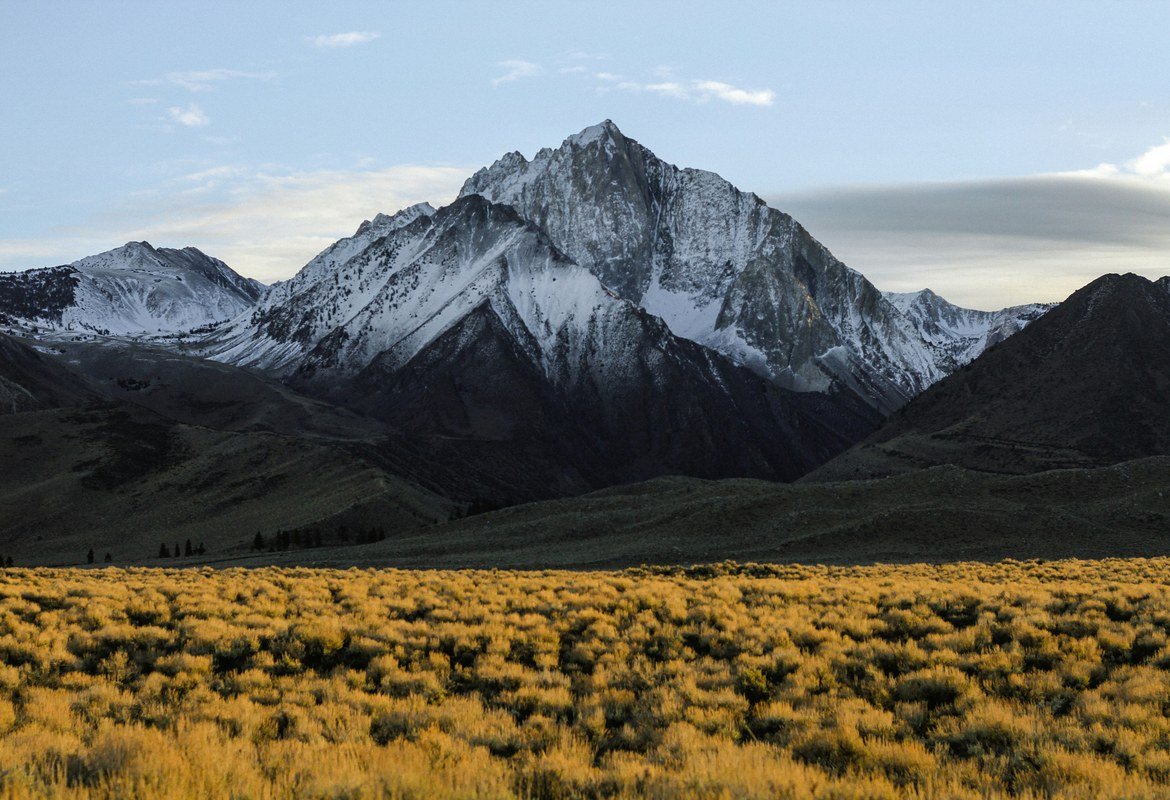



On 26 September 1897, in the rocky North-West Frontier of British India (today’s Pakistan-Afghanistan border region), 21 soldiers of the 36th Sikh Regiment held a small stone fort called Saragarhi against a relentless assault by approximately 10,000 Orakzai and Afridi Pashtun tribal warriors for over seven hours — until every last Indian soldier was dead. Not a single one surrendered. Not a single one fled. Every man fought until physically overwhelmed.
The Battle of Saragarhi is not merely an Indian military story — it is recognized globally as one of the finest acts of collective gallantry in military history. The British Parliament paid tribute. The French Legion Étrangère lists it among history’s greatest last stands. Today, every Sikh regiment in the Indian Army celebrates Saragarhi Day on 12 September with regimental ceremonies and the reading of the names of the 21 martyrs. This is their story — and the broader story of the Sikh Regiment’s unmatched legacy of valour.
1. The Sikh Regiment: A Heritage of Unbroken Valour
The Sikh Regiment of the Indian Army is among the most decorated infantry regiments in the world. Raised in 1846 after the conclusion of the First Anglo-Sikh War, the regiment has accumulated an extraordinary battle history across three centuries of warfare. It holds the distinction of being one of only two regiments in the Indian Army to have been awarded a Theatre Honour for virtually every major campaign and theatre of the British Indian Army’s history.
The Sikh soldier’s fighting spirit is rooted in the theological tradition of the Sant-Sipahi (Saint-Warrior) — the ideal of the baptized Khalsa warrior who stands as a defender of the weak and a challenger of tyranny, regardless of cost. The war cry — “Bole So Nihal! Sat Sri Akal!” (He who speaks shall be blessed! Truth is timeless!) — is not merely a battle shout; it is a declaration of spiritual readiness to sacrifice oneself for a righteous cause.
2. The Battle of Saragarhi: 21 vs 10,000
By September 1897, the North-West Frontier was ablaze with tribal rebellion. The Orakzai and Afridi tribes had mobilized a large lashkar (war band) to destroy the series of British-controlled signal towers between Fort Lockhart and Fort Gulistan — cutting off communication between the two garrisons. Saragarhi was the communications link between them — a small mud-brick signalling outpost manned by 21 soldiers of the 36th Sikh Regiment under the command of Havildar Ishar Singh.
The Last Transmission: Signaller Gurmukh Singh
As the tribal assault began in the early morning, Signaller Gurmukh Singh maintained continuous heliograph communication with Fort Lockhart’s commanding officer, Colonel Haughton, throughout the battle — providing real-time reports of the fight as his comrades fell one by one around him. His transmissions provide the historical record of the battle. His final recorded message was: “I am going to fight the enemy. Close down the heliograph.” He then laid down his heliograph, picked up his rifle, and joined the final resistance. He was killed in the fighting. He was awarded the Indian Order of Merit — the highest gallantry award available to Indian soldiers under British rule — posthumously.
| Name | Rank | Role in Battle |
|---|---|---|
| Havildar Ishar Singh | Havildar (Sergeant) | Commanded the defence; inspired the men; killed fighting |
| Signaller Gurmukh Singh | Sepoy (Private) | Maintained heliograph communications throughout; killed in final stand |
| Naik Lal Singh | Naik (Corporal) | Led section defence at the main gate; killed in action |
| Sepoy Hira Singh | Sepoy | Led counterattack during breach; killed in close combat |
| Bhagwan Singh | Sepoy | Killed while spiking guns to prevent capture |
3. Why They Refused to Surrender
Historical accounts suggest the Orakzai lashkar offered terms of surrender — their lives in exchange for leaving the fort. Havildar Ishar Singh refused. Why? The reasons are both practical and deeply philosophical. Practically, the 21 Sikhs understood that their resistance — drawing out a force of 10,000 tribal warriors for hours — was buying critical time for Forts Lockhart and Gulistan to prepare for the attacks that would follow Saragarhi’s fall. Their deaths purchased the survival of their fellow soldiers.
Philosophically, the Sikh martial tradition of the Khalsa teaches that death in righteous combat — shaheedi (martyrdom) — is the highest honour a warrior can receive. Surrender before overwhelming odds was not within the lexicon of their identity as Sant-Sipahis. Havildar Ishar Singh reportedly stood at the door of the fort alone after all his men were dead or mortally wounded, fighting with a fixed bayonet until he was overwhelmed. All 21 men were posthumously awarded the Indian Order of Merit — the only time in history that an entire military unit has been collectively awarded its highest honour.
4. The Sikh Regiment in Modern India’s Wars
The Sikh Regiment’s extraordinary legacy continued through Indian Independence. In the 1965 war, the 1st Sikh Regiment fought at the Battle of Chawinda — one of the largest tank battles of the 20th century. In 1971, Sikh regiment battalions fought across both the eastern and western fronts. In Kargil 1999, the 8th Sikh Regiment was instrumental in the recapture of Tiger Hill. The regiment has produced seven Param Vir Chakra awardees — more than any other single regiment in the Indian Army.
5. The Legacy of Saragarhi in the Modern Sikh Regiment
The impact of the Battle of Saragarhi on the institutional culture of the Sikh Regiment cannot be overstated. When Havildar Ishar Singh and his 20 companions chose death over surrender in 1897, they established a standard of courage and devotion to duty that every subsequent generation of Sikh soldiers has aspired to meet. Every soldier who joins the Sikh Regiment learns the names and stories of the 21 Saragarhi martyrs in basic training. Every commanding officer takes the oath of command beneath a portrait of Havildar Ishar Singh.
The practical military impact of Saragarhi extended beyond symbolism. The seven-hour resistance of 21 soldiers against 10,000 warriors — killing an estimated 180 tribal fighters and wounding hundreds more — prevented the tribal lashkar from overwhelming both Fort Lockhart and Fort Gulistan before British reinforcements could arrive. Military historians have calculated that the delay imposed by the Saragarhi garrison saved both garrisons — each holding hundreds of soldiers — from being overrun. The 21 men did not die in vain: their sacrifice had direct, measurable tactical consequences that altered the outcome of the entire North-West Frontier campaign of 1897.
Today, Saragarhi’s legacy travels far beyond the Sikh Regiment. The Indian Air Force’s Western Air Command, which defends Indian airspace over the Punjab and Rajasthan sectors, has named multiple squadrons and operational procedures after the Saragarhi martyrs. Bollywood’s adaptation of the story — the 2019 film Kesari directed by Anurag Singh and starring Akshay Kumar — introduced the battle to a global audience of over 100 million viewers worldwide, cementing Havildar Ishar Singh’s place not just in regimental memory but in the national conscience of modern India.
Frequently Asked Questions (FAQs)
Is there a memorial to the 21 heroes of Saragarhi?
Yes. A Saragarhi Memorial Gurdwara was established in Ferozepore (Punjab) and another in Amritsar in honour of the 21 martyrs. The Indian Army’s Sikh Regiment Centre in Ramgarh (Jharkhand) features a dedicated Saragarhi Hall. In the UK, a Saragarhi memorial stands in London, honouring the soldiers who fell. A major Bollywood film, Kesari (2019) starring Akshay Kumar, brought the story to global audiences with enormous commercial and cultural impact.
How many Param Vir Chakras has the Sikh Regiment won?
The Sikh Regiment has won 7 Param Vir Chakras — including those of Lance Naik Karam Singh (1947-48), Company Havildar Major Piru Singh (1947-48), and others in the 1965 and 1971 wars — making it the highest PVC-winning regiment in the entire Indian Army.
Does the Indian Army still celebrate Saragarhi Day?
Yes. Saragarhi Day is observed on 12 September every year by all battalions of the Sikh Regiment with great solemnity and pride. The names of all 21 martyrs are read aloud at ceremonial parades, the Ardas (Sikh prayer) is offered, and the battle story is retold to new recruits as the foundational narrative of what it means to be a Sikh soldier in service to the nation.
Final Assessment: 21 Names That Will Live Forever
Saragarhi was not a victory in the conventional military sense — the fort fell, and all 21 soldiers died. But it was the most profound of moral victories: 21 men who chose death over dishonour, and in doing so, defined courage for all time. Their names — Ishar Singh, Lal Singh, Chanda Singh, Sundar Singh, Ram Singh, Uttar Singh, Sahibad Singh, Hira Singh, Daya Singh, Jivan Singh, Bhola Singh, Narayan Singh, Gurmukh Singh, Jivan Singh, Bhagwan Singh, Jiwan Singh, Gurmukh Singh, Ram Singh, Bhagwan Singh, and Nand Singh — are not just history. They are the eternal heartbeat of every Sikh soldier who carries a rifle in service to India today.
As new generations of Indians grow up in an era of rapid technology and globalisation, the story of the 21 Saragarhi martyrs gains renewed importance. It teaches a fundamental truth that no algorithm or artificial intelligence has ever captured: that true courage is not the absence of fear, but the absolute mastery of it — the decision, taken consciously in the full knowledge of mortal danger, to stand and fight for something greater than oneself. Havildar Ishar Singh and his 20 brothers made that choice on a rocky North-West Frontier ridge 127 years ago, and India has never forgotten them.