

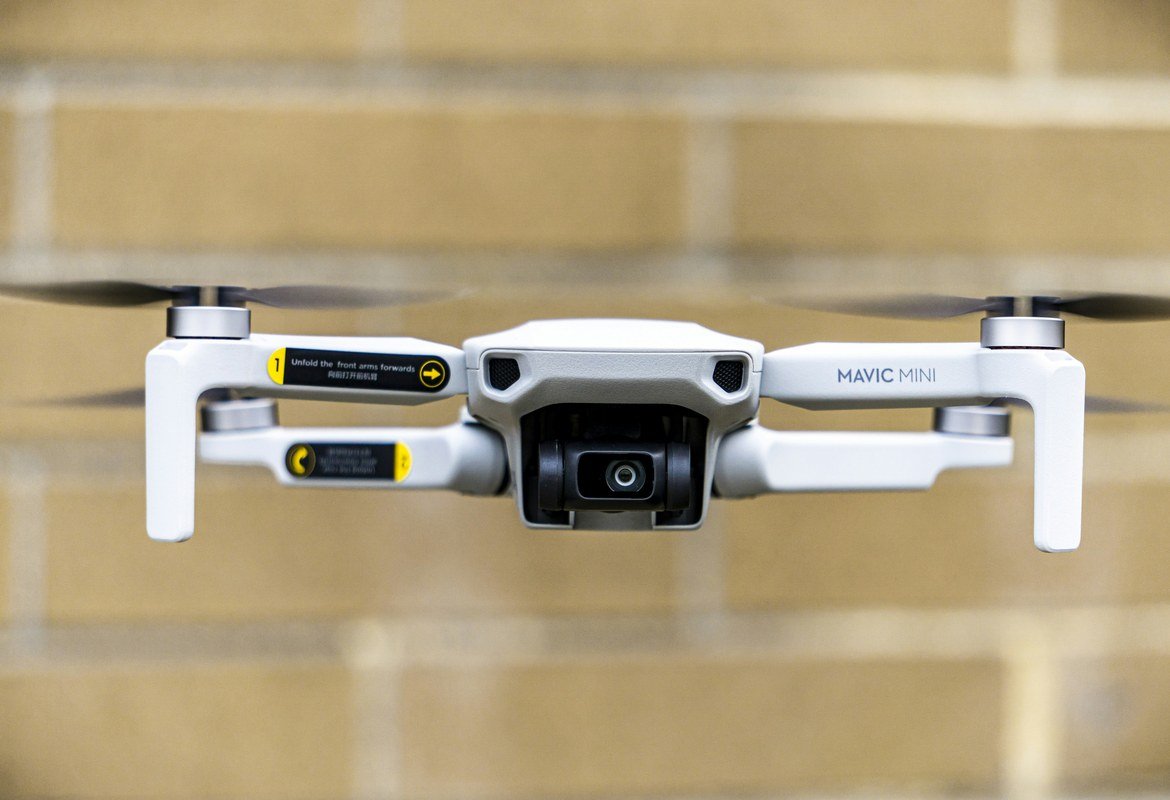


Urban transportation is approaching an irreversible technological inflection point. For over a century, municipal mobility was anchored in human-operated internal combustion automobiles—a model characterized by catastrophic annual traffic fatalities, soul-crushing traffic congestion, wasted urban land allocated to parking structures, and massive environmental carbon emissions. Today, the convergence of high-compute artificial intelligence, LiDAR sensor suites, high-definition spatial mapping, and fully electric drive units has brought autonomous robotaxis from speculative science fiction into commercial reality.
Across major metropolitan centers—including San Francisco, Phoenix, Wuhan, Beijing, and Los Angeles—fully driverless commercial robotaxis now operate around the clock without human safety drivers, completing millions of paid passenger trips. Yet, the mass adoption of autonomous transportation is not merely an engineering achievement; it is an intricate regulatory, urban architectural, and socio-economic transformation. In this comprehensive investigative dispatch, we explore the sensory stack powering Level 4 autonomy, evaluate machine-learning neural perception models, analyze global safety benchmark statistics, and examine the future of human cities without private cars.
1. The SAE Levels of Driving Automation: Defining the Autonomous Hierarchy
To evaluate autonomous mobility objectively, one must reference the standardized hierarchy established by the Society of Automotive Engineers (SAE):
| Automation Level | Operational Definition | Human Driver Role | Commercial Deployment Status |
|---|---|---|---|
| Level 1: Driver Assistance | Single automated function (Adaptive Cruise Control or Lane Keep Assist) | Human retains complete physical control and continuous operational oversight | Standard feature across modern production vehicles |
| Level 2: Partial Automation | Simultaneous steering and acceleration/braking (e.g., Highway Autopilot) | Human must maintain hands on wheel and eyes on road at all times; full liability | Ubiquitous across modern consumer vehicles |
| Level 3: Conditional Automation | Vehicle handles driving tasks in specific conditions (e.g., traffic jams on highways) | Human may divert attention but must resume control within 10 seconds of alert | Commercial pilot deployments (Mercedes Drive Pilot, BMW) |
| Level 4: High Automation | Vehicle operates completely without human intervention in geofenced operational design domains (ODD) | Zero human driver required; passengers can sleep; vehicle safely stops if system fails | Active commercial robotaxi fleets (Waymo, Baidu Apollo, Zoox) |
| Level 5: Full Automation | Vehicle drives autonomously under all environmental conditions, everywhere on Earth | Zero human intervention under any weather or road condition | Theoretical research frontier; unachieved commercially |
2. The Sensor Stack Debate: Sensor Fusion vs Pure Vision
A fierce ideological and engineering debate divides the autonomous mobility industry: should vehicles rely on a redundant multi-sensor fusion stack, or can autonomy be solved through camera vision alone?
The Multi-Sensor Fusion Stack (The Waymo / Baidu Philosophy)
Proponents of sensor fusion argue that safety-critical transportation demands physical hardware redundancy across disparate physics modalities:
- LiDAR (Light Detection and Ranging): Fires millions of laser pulses per second, constructing a millimeter-precise, 3D point-cloud spatial map of the surrounding environment up to 300 meters away, operating with absolute precision regardless of ambient lighting conditions or complete darkness.
- Automotive Radar (Radio Detection and Ranging): Emits millimeter-wave radio frequencies. While radar possesses lower spatial resolution than LiDAR, it penetrates fog, blinding rainstorms, blizzards, and airborne dust effortlessly, while providing instantaneous Doppler velocity measurements of moving objects.
- High-Resolution Optical Cameras: Essential for decoding semantic human infrastructure: reading color traffic signals, emergency vehicle flashing beacons, complex construction warning signs, and painted lane markings.
The “Pure Vision” Philosophy (The Neural End-to-End Model)
Conversely, pure vision advocates argue that human beings navigate roads using only two eyes and a biological neural network. Under this framework, heavy LiDAR and radar hardware introduce sensor conflicts and prohibitive manufacturing costs. Instead, eight or more high-resolution surround cameras feed raw video directly into massive End-to-End Neural Networks, where deep transformer models process visual photon inputs and output steering angle, acceleration, and braking commands directly without intermediate handcrafted heuristic code.
3. Safety Metrics: How Autonomous Vehicles Compare to Human Drivers
Public acceptance of autonomous vehicles is hindered by an innate human psychological bias: when a human driver causes a fatal crash due to drunk driving or texting, it is viewed as an ordinary, tragic local event. When an autonomous vehicle is involved in a minor fender-bender, it becomes a sensational global news headline.
The Empirical Safety Data
Rigorous statistical studies analyzing millions of miles of commercial driverless robotaxi operations reveal compelling safety improvements over human drivers:
- 85% Reduction in Injury-Causing Crashes: Independent safety studies comparing commercial Level 4 driverless fleets against baseline human crash statistics demonstrate an 85% drop in injury-causing accidents per million miles traveled.
- Elimination of the Human Behavioral Killers: Over 94% of fatal human automobile crashes are caused by three factors: driving under the influence of alcohol/drugs, texting/distracted driving, and reckless speeding. Autonomous vehicle software never consumes alcohol, never texts, never falls asleep, and obeys statutory speed limits with mathematical consistency.
- 360-Degree Omnidirectional Spatial Awareness: A human driver possesses a limited 180-degree visual cone forward and must rely on mirrors to check blind spots. An autonomous vehicle maintains continuous, unblinking 360-degree spatial tracking of hundreds of objects simultaneously—tracking a pedestrian stepping off a curb behind a parked van while simultaneously monitoring a speeding cyclist approaching from the rear.
4. Edge Cases and the “Long Tail” of Autonomous Driving
Autonomous vehicles master 99% of normal driving conditions effortlessly. The true engineering bottleneck is solving the “Long Tail” of bizarre edge cases—rare, unpredictable events that human drivers resolve using common sense.
Real-World Edge Case Scenarios
- A construction worker holding a manual stop-sign while wearing a reflective vest, gesturing with his hand for traffic to proceed through a red light into oncoming lanes.
- A child chasing a rolling basketball out from between two parked SUVs on a residential street.
- Emergency first responders (fire engines, police cruisers) operating unconventional counter-flow maneuvers through an intersection with sirens blaring.
Modern autonomous fleets solve the long tail through Remote Tele-Assistance Infrastructure. When an onboard AI encounters an ambiguous scenario with high uncertainty (e.g., an unmapped road closure surrounded by irregular traffic cones), the vehicle stops safely and pings a human fleet technician located in a remote operations center. The remote technician reviews the 360-degree camera feed, issues a high-level strategic waypoint directive (e.g., “Nudge into left lane around the construction zone”), and hands control back to the autonomous driving system.
5. Urban Re-Architecture: Cities Without Parking Deserts
The widespread adoption of autonomous mobility-as-a-service (MaaS) will fundamentally transform the physical geography of modern cities. In standard metropolitan centers, over 30% of total land area is dedicated exclusively to storing stationary private vehicles—in surface parking lots, multi-story concrete garages, and curbside spaces.
The Autonomous Fleet Efficiency Paradigm
- 95% Vehicle Utilization: The average privately owned consumer automobile sits idle in a garage or parking space for 95% of its 24-hour day, depreciating while taking up valuable urban real estate. An autonomous robotaxi operates continuously across the day, cycling through dozens of passenger trips and traveling to peripheral charging depots outside prime city centers during off-peak hours.
- Reclaiming the Public Commons: Eliminating surface parking lots liberates millions of square meters of prime urban land for affordable residential housing, pedestrian greenways, urban parks, and dedicated cycling infrastructure, transforming concrete-choked cities into vibrant, walkable human habitats.
- Universal Mobility Accessibility: Driverless fleets provide autonomous mobility to populations historically excluded from private transportation: the elderly, the visually impaired, individuals with physical disabilities, and youth who cannot hold driver’s licenses.
6. The Autonomous Freight and Long-Haul Logistics Frontier
While consumer robotaxis capture media headlines in metropolitan downtowns, an equally transformative revolution is taking place across inter-state highway freight corridors: Autonomous Class-8 Heavy Semi-Trucks.
The Economic Imperative of Highway Freight Autonomy
- Shattering the 11-Hour Hours-of-Service Constraint: Human commercial truck drivers are legally mandated to pause driving after 11 hours of daily service to sleep and manage physical fatigue, meaning a transcontinental cargo load takes four to five days to traverse the country. Autonomous long-haul trucks operate continuously for 22+ hours per day, stopping only to take on diesel fuel or fast-charge electric batteries, cutting coast-to-coast delivery times by more than 50%.
- The “Hub-to-Hub” Operational Architecture: Autonomous trucks do not navigate chaotic urban delivery alleyways. Autonomous systems manage the long, predictable 900-mile highway stretch between isolated freight hubs situated directly off interstate exits. Local human drivers then handle the initial “first mile” from factories and the complex “last mile” from highway freight transfer stations to urban distribution centers, creating a safe, hybrid freight ecosystem.
- Fuel Efficiency and Aerodynamic Platooning: Autonomous driving software eliminates aggressive driver braking and rapid acceleration, optimizing transmission shifting and aerodynamic slipstreaming (“platooning”) behind lead trucks to reduce commercial fuel consumption by 10% to 15%.
Frequently Asked Questions (FAQs)
What happens if a robotaxi loses cellular internet connectivity while driving?
All core driving intelligence, perception models, motion planning algorithms, and safety failsafes reside entirely onboard the physical vehicle’s local computer hardware. The vehicle does not rely on cloud computing or cellular internet to steer, brake, or perceive obstacles. If cellular connectivity drops, the vehicle continues driving normally to its destination using local sensors.
How do autonomous vehicles perform in severe winter blizzards and heavy snow?
Severe winter weather remains a challenging operational frontier. Falling snow scatters optical camera and LiDAR laser beams, while heavy snow cover obscures painted lane markings and curbs. Fleets operating in winter climates deploy sub-surface ground-penetrating radar (which maps subterranean geological features to localize the vehicle without visual lane lines) alongside heated sensor lenses to prevent ice buildup.
Who is legally liable if an autonomous Level 4 vehicle causes an accident?
In fully driverless Level 4 operation, the passenger riding in the backseat bears zero legal liability for accidents. Legal and financial liability shifts entirely to the autonomous vehicle manufacturer and commercial fleet operator, covered through commercial enterprise insurance frameworks.
Final Assessment: An Inevitable Mobility Paradigm Shift
The transition toward autonomous transportation is an inevitable technological and urban evolution. By eliminating catastrophic human driving errors, liberating urban land from parking deserts, and providing clean, accessible on-demand mobility for all citizens, autonomous mobility will reshape human society for the next century.